

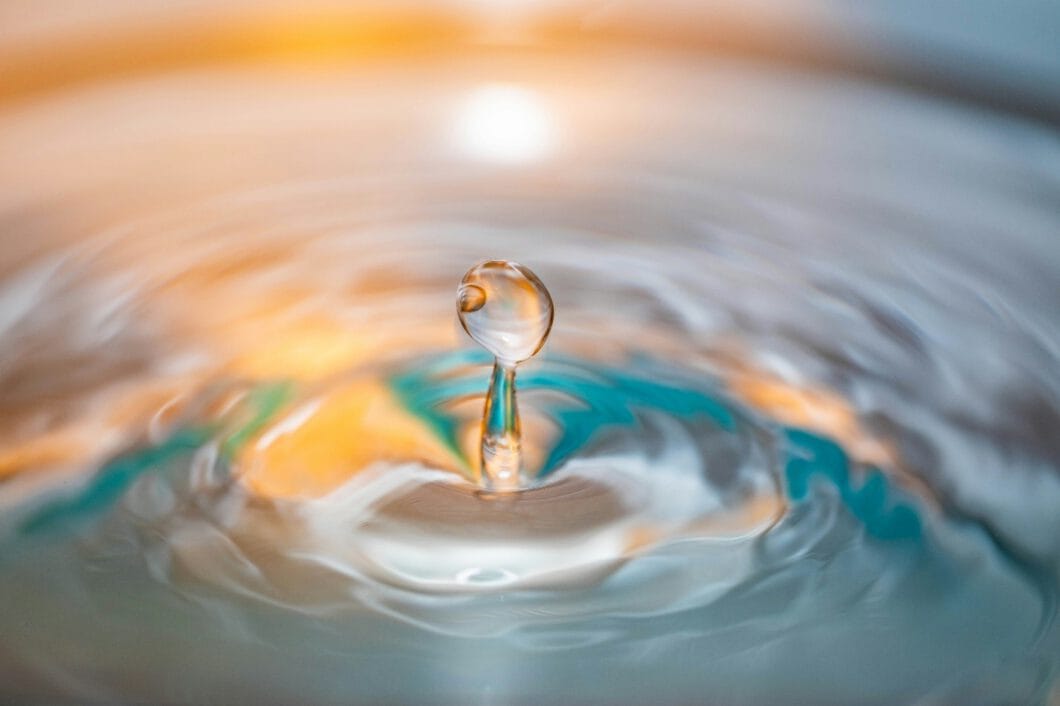
Āpas / Apah (आपस् / अपः) – Water
“By the interaction of fire and the visual sensation, the subtle element taste evolves under a superior arrangement. From taste, water is produced, and the tongue, which perceives taste, is also manifested.”
(Śrīmad Bhāgavatam 3.26.41)
***
An old pond
A frog jumps into the water
Sound of water
A frog jumps into the water
Sound of water
(Haiku by Bashō)
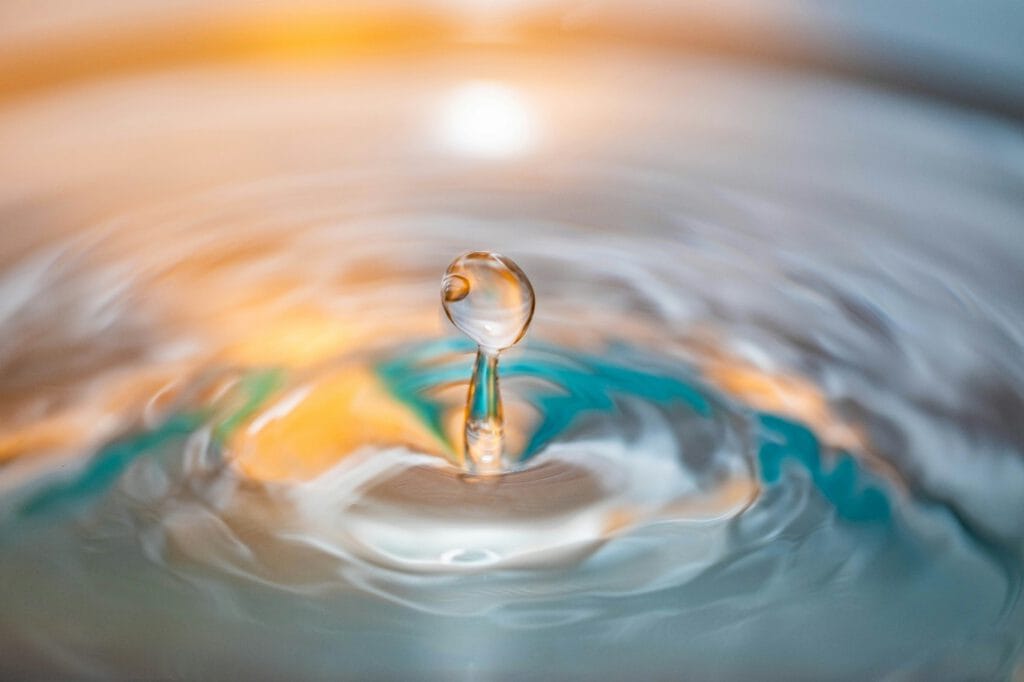
This article will be a bit longer—not because the Water element is more important than Fire or Air, but precisely because it is often underestimated, even though it plays a central, supporting role. I am reminded of a statement from the Tao Te Ching, which roughly translates to:
“Know the masculine, keep to the feminine.”
I will attempt to explain here why this sentence is so significant—and why it stands in such close relationship to the Water element.
The Water element is assigned to the feminine principle. It stands for forces that appear passive—though “passive” is by no means meant negatively here. Water possesses a resting, inward-directed quality. It is receptive, attentive, waiting, and connecting: if you place two drops of water carefully next to each other, they immediately merge into a whole. Qualities such as empathy, emotion, love, and intuition are ascribed to it. Its power lies not in asserting itself, but in grasping, sensing, and absorbing. Precisely in this withdrawn, inner strength—in this turning inward—lies the mighty core of this extraordinary quality.
All the feelings we experience in everyday life belong here—as do those that have arisen from our upbringing, from injuries, or inner wounds. These are feelings that sometimes seem mysterious to us yet accompany us constantly. Fear, anger, grief, joy, euphoria—emotions that resurface in certain situations and with which we struggle, but which demand one thing above all: acknowledgment. All these inner currents can be assigned to the element of Water.
Hidden Emotions
The Moon always has a side we cannot see. This indicates very clearly that we humans also carry a side within us that either remains hidden from others or that we ourselves do not clearly perceive: the world of our emotions and feelings.
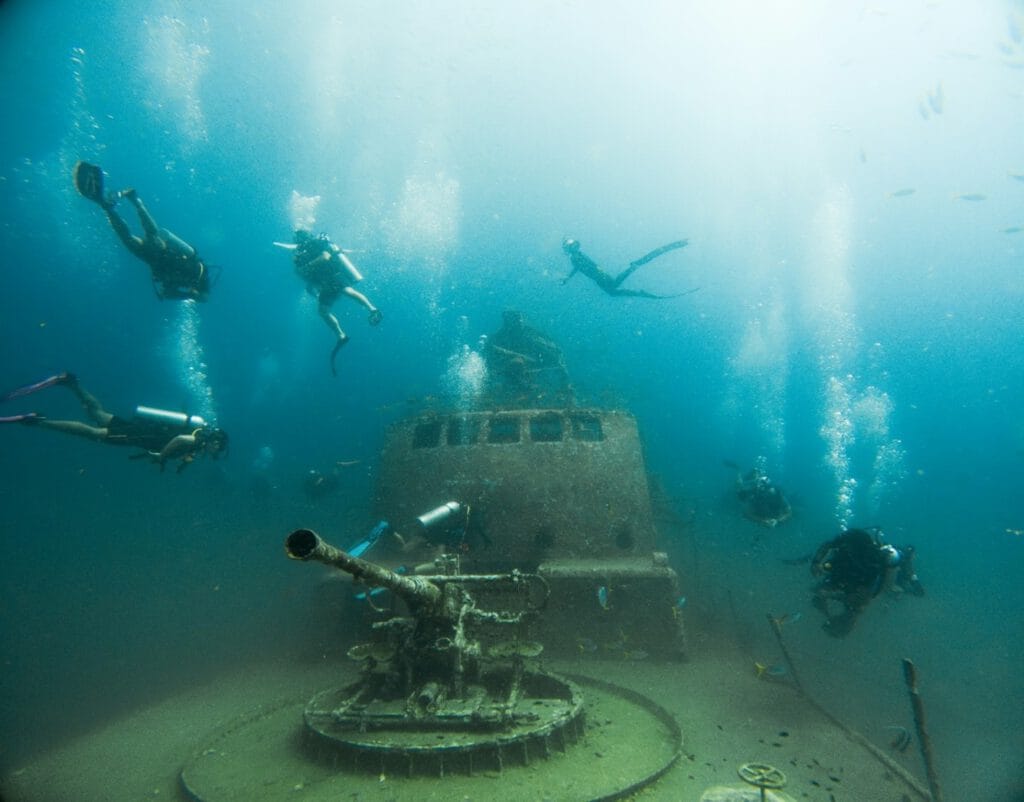
The ocean reaches depths of up to 4,000 meters in some places. The Titanic sank into exactly this darkness, and for a long time, it was extremely difficult to locate its wreck. Remote-controlled robots had to be sent into regions no human has ever entered.
It is the same with our emotions: Some lie deeply hidden.
Sometimes they rise to the surface in dreams. Sometimes they are triggered in everyday life by seemingly harmless situations and suddenly appear overwhelmingly present. Then we ask ourselves: Where do they come from? What triggered them?
The Water Signs in Astrology
How would a water sign deal with these emotions? Generally, they would react to a situation more emotionally, whereas, in comparison, air signs act from a cooler and more intellectual standpoint.
Scorpio dives into the depths, inspects the shipwreck with unwavering intensity, wrestles with the adventure, and returns to the surface transformed. Cancer circles the wreck at a safe distance, guards it carefully, yet remains deeply connected. The Pisces native knows that he does not have to dive all the way to the bottom—he shares the same element with the wreck. The water that surrounds him also encloses the ship on the ground. He is already connected without having to take a breath deeper.
In all three cases, a different way of engaging with and relating to the emotion is shown. And what surprises are to be found on the seabed! Some might say: “There are corpses in the cellar.” If the ship is salvaged and lifted into the light of consciousness, it changes its texture, color, and nature in an alchemical process.
If the Moon is afflicted in the personal horoscope—for example, by unfavorable sign placements, aspects, or conjunctions—it can be difficult for us to cope with our emotional world. The natural adaptability suffers, and one may feel as if one is being thrown from one feeling to the next without an inner anchor. The result is the full spectrum of emotional dysfunctions.
Water in Zen Shiatsu
In the view of Zen Shiatsu, the Water element is characterized by an essential downward movement that conducts energy deep into the earth and, in the human body, directly into the Hara. In this energetic center in the lower abdomen, our original Ki and essence are received and stored, similar to how nature retreats into the depths in winter for regeneration.
On an emotional level, water is closely linked to fear, which in Zen Shiatsu is viewed as a fundamental survival instinct and is associated with the kidneys.
Nurturing Principle and Manas
The Water element is primarily associated with the Moon and Venus. Most perceptible is the influence of the Moon, which creates the ebb and flow of tides.
In many traditions, the Moon is closely connected with the mother and maternal qualities. The Water element thus also embodies the nurturing feminine principle. This nurturing does not happen through active action in the solar, outward-directed sense. Rather, it is a silent, present quality—simply “being there.” Just as a mother nurtures her newborn, without intention, goal, or strategy, solely out of presence. It is an expression of unconditional love and that physical closeness which provides support and security in the first year of life.
This nurturing force also works where no doing is required. Often it is enough to let things be, to accept them with a loving gaze, and to accept them as they are. Acceptance and reception therefore form central traits of the Water element.
In Vedic astrology, the Moon is equated with Manas. Manas denotes the perceiving, feeling mind—that part of our consciousness that absorbs sensory impressions, processes them emotionally, and reacts instinctively to the outside world. It is not the discriminating intellect (Buddhi), but the mind that feels, that resonates.
Through the five senses, we are receptive to the qualities of creation. Manas consists of Jiva, the living consciousness, and Ahamkara, the “I,” the idea of a separate existence. Jiva experiences itself and thereby brings forth the ego—the ego is the idea of a separate existence (“I,” “Mine”). From “Mine,” attachments arise. Thus, the Moon represents the individual consciousness that experiences all its joys and sorrows.
In Buddhist traditions, the mind is often compared to a calm, reflecting water surface. The unrest of the mind resembles the waves or ripples on this surface. At the same time, it is emphasized that the fundamental vastness and tranquility of the mind is indestructible—just as the water beneath the waves ultimately remains still.
***
“The mind is a wonderful vehicle. Meditation is an exploration of the subconscious. In meditation, thoughts from the past emerge, feelings and emotions come to the surface. When we meditate, our cells become aware of the thoughts and perceive how stress dissolves. We can begin to speak, share, and communicate with every cell.”
Dr. Vasant Lad
The Mutable, The Cyclic
A further central property of the Moon is its changeability. Within about 30 days, it cyclically changes its shape: It waxes, it wanes, it is completely darkened or completely bright. In this rhythm, both change and return are revealed.
This quality is also reflected in the human personality. The Moon stands for our emotional mutability, but equally for our adaptability—for the ability to adjust to constantly changing external circumstances. This fluidity is a great strength of the Water element.
The influence of the Moon on the tides is widely known. I remember very well when I once went on vacation in France by the Atlantic. Countless small sand hoppers (which actually look like miniature shrimp) were on the beach. When the full moon stood bright in the sky, it felt like all the fleas came jumping up from the beach onto the land to mate. It was a miniature mass migration to a great fertility festival by moonlight.
Perhaps the cycle of the woman functioned similarly in a time when one was not exposed to artificial light and body chemistry was not altered by hormonal preparations.
“Thus the high tide finds its correspondence in anabolic processes such as the maturation of the egg cell and ovulation, while one can compare the low tide with catabolic and cleansing processes such as menstruation… In earlier times, women also bled in harmony with the moon phases, which is why the old fertility festivals like Easter or the harvest festivals in August took place at the full moon, when as many women as possible had their ovulation, so that the fertility of nature could be transferred directly to the women.”*
Moon Signature in Herbalism
Much is influenced by the cycles of the Moon. At the New Moon, for example, the juices of plants retreat deep into the roots. At the Full Moon, they rise up into the blossoms and leaves.
In traditional Western herbal medicine, certain plants are assigned to the so-called Moon signature. Characteristic of them is a high mucilage and sap content as well as special phenomena like the formation of guttation drops, such as on Lady’s Mantle. This also includes plants that prefer to grow in or near water, such as algae, bladderwrack, bogbean, sweet flag (calamus), or the water lily.
Their healing effect is directed primarily at those processes and organs in the human body that are considered “lunar.” These include feverish conditions (associated with bogbean), the mucous membranes of the uterus and gastrointestinal tract (on which sweet flag acts), as well as the sexual organs, which are traditionally associated with Lady’s Mantle and water lily.
In Western astrology, the Moon is also considered the ruler of the lymphatic system. A herbal counterpart to this is seen in the milky juices of plants like dandelion, opium poppy, or celandine. This is only a small list of a multitude of such medicinal plants.
Even the blood in the human body is placed under the dominion of the Moon.
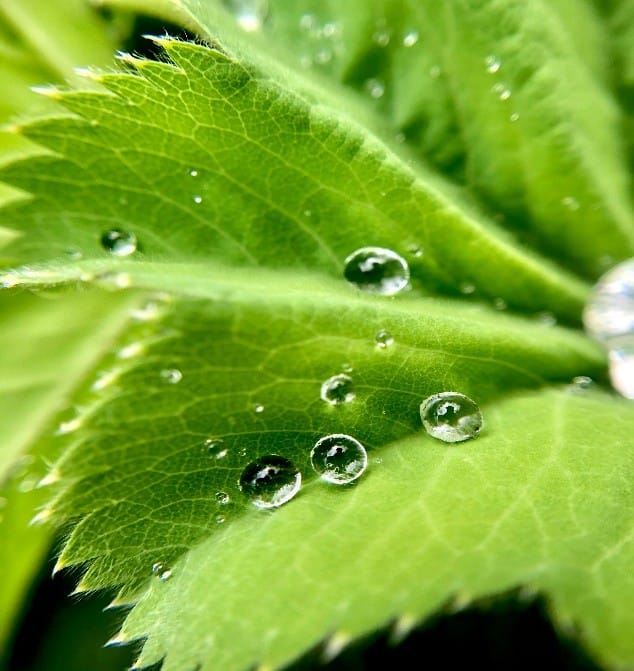
“…Even the darkened moon no longer seems so terrible to him, as he remembers a legend which tells that Lady Moon collects all the released memories and forgotten dreams of humanity within herself every night. She keeps these in her silver chalice until dawn. Then, at the first light of the new day, so this story tells, all these forgotten dreams and abandoned memories are returned to the earth as moon juice or dew. Mixed with the lacrimae lunae, ‘the tears of the moon’, this dew nourishes and refreshes all life on earth…”
From “Psychology of Tarot” by Sallie Nichols
*The Herbal Lore of Paracelsus (p. 309)
Water Needs Earth
In the horoscope, the signs opposite the water signs belong to the Earth element. Thus, the sign of Pisces faces Virgo. The sign of Cancer faces Capricorn, and finally, Scorpio faces Taurus.
Water requires the Earth element to come into a status of balance. The structuring, anchoring, and manifesting energy of the Earth element directs the Water element into controlled channels, and conversely, the water expands and purifies the Earth element, making it more permeable so that it is less rigid and stiff.
Last year, I had a remarkable number of incidents with small floods, which I always experienced firsthand. Life sometimes gives us signs to draw attention to an imbalance of elements. If pipes burst, the boat capsizes, and the washing machine no longer pumps out within a short period, it may be that one’s own flow of feelings is out of balance. This can be understood as a hint to consciously deal with one’s own feelings.
Sometimes life also forces us to keep still, for example through an illness. Then our inner life finally has space to make itself noticed—this is a deeply water-elemental state. The question is then how we deal with it.
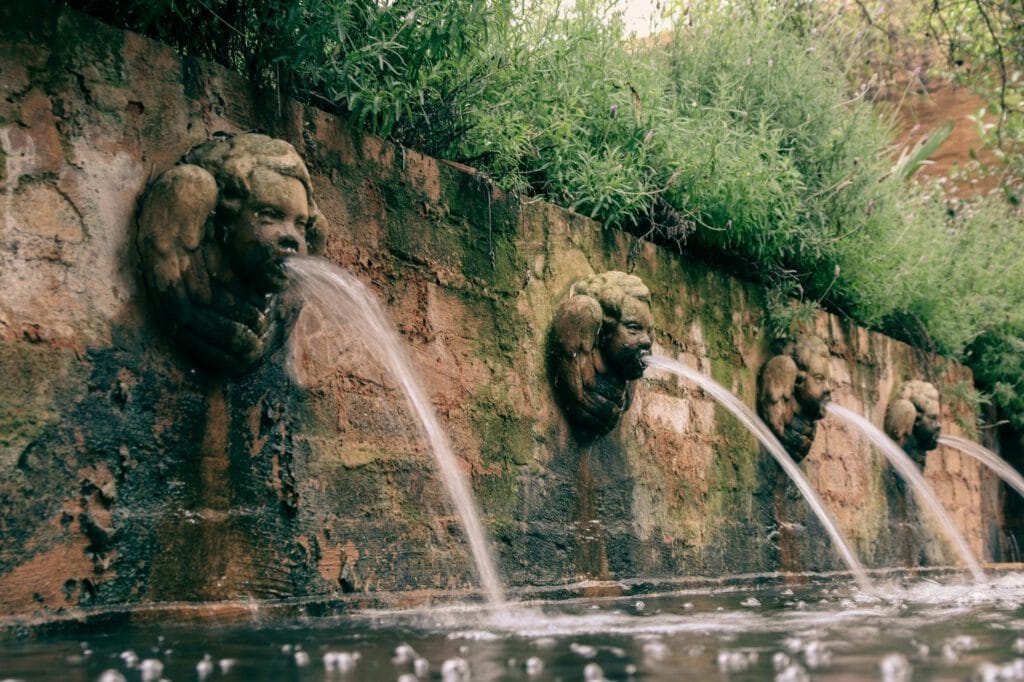
Attributes of Water:
- Gunas (Qualities): Cool, liquid, heavy, soft, oily, slimy. The Gunas describe the basic characteristics of an element.
- Karmas (Actions/Principles): Karmas are the fundamental modes of action or movement patterns of the element. For Water, these are downward movement, purification, connecting force, adhesion, and percolation. Water can cleanse, connect, absorb impressions, and work into the depth—it works subtly, without violence.
- Jñānendriya (Sensory Faculty): Jñānendriya denotes the sense organ through which we perceive the world. For the Water element, this is Taste. The tongue as a sense organ mirrors the ability of water to grasp, distinguish, and enjoy impressions.
- Karmendriya (Faculty of Action): The Karmendriya is the organ through which we actively act. For Water, this is Procreation. This assignment shows that Water is closely connected with life, preservation, and the passing on of life force.
- Tanmātra (Subtle Essence): Tanmātra denotes the subtle essence from which sensory perception arises. For Water, this is Rasa—Taste, perceived via the tongue. It symbolizes the ability of the element to absorb subtle impressions and transform them into physical and mental experience.
Water is referred to as Apas and stands for chemical energy. It is the universal solvent, and all biochemical processes in the body are carried and controlled by the element of Water.
Individuals with a strong Water imprint appear gentle, empathetic, and emotionally accessible. They easily build stable relationships and are perceived as warm-hearted, caring, and connecting. Their inner calm and balance enable them to carry responsibility and burdens with comparatively little internal pressure, which is why they often take on a supporting role for others.
At the same time, they possess a high degree of inner openness and learning ability, especially in areas to which they have a personal or emotional relationship. Their acquisition of knowledge is strongly intuitive. Overall, they are considered realistic, worldly-wise, and grounded in life, with a natural understanding of human and social connections.
Water as Origin, Prakriti, and Cosmic Principle
In many Asian traditions, Water is considered the fundamental form of manifestation and the origin of all life. It is associated not only with physical but also with spiritual regeneration and stands symbolically for fertility, purity, wisdom, grace, and virtue.
As a flowing element, Water possesses a dissolving, connecting quality; at the same time, when it collects, it can densify and hold together. In this dual nature, it reflects different basic tendencies: It can have a balancing and clarifying effect (Sattvic), but also pull downwards into the depth (Tamasic), while extending and spreading horizontally (Rajasic).
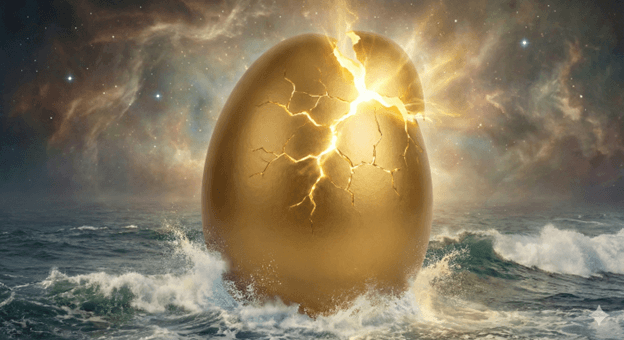
Water is understood here as the primordial substance, as Materia Prima or Prakriti—as that from which everything emerges. In Hindu texts, the world first appears as a boundless ocean; likewise, Daoist traditions speak of vast waters without shores. The World Egg, from which creation unfolds, is hatched on the surface of these primordial waters. In the biblical Genesis, too, the Divine Spirit hovers over the waters before form arises. In the Chinese conception, water corresponds to the formless and directionless origin, the chaos before all distinction.
The idea of primordial waters, an ocean of beginnings, is found almost everywhere in the world, reaching as far as Polynesia. Many Austroasiatic cultures locate the cosmic creative power in water. Frequently, the myth of a “diver being” appears, who brings a piece of earth from the depths to the surface—like the Hindu boar who lifts the first germ of firmness out of the water. This motif resembles an embryo that steps into the light at the moment of formal manifestation.
“I don’t know why I like water so much. Water is a mysterious element because of its molecular structure. And it is very cinematic; it conveys movement, depth, change. It is one of the most beautiful things in the world. Nothing is more beautiful than water. But since everything in life has a reflection in our subconscious, I don’t want my love for water to be viewed too one-sidedly. Perhaps it lies in an ancient memory; my ancestors, who drew energy for life from the water—who knows? In any case, that is the reason why I couldn’t make a film without water.”
Andrei Tarkovsky
***
Thus, the Water element ultimately points us back to the wisdom of the Tao Te Ching. To recognize the masculine means to consciously perceive the forces of acting, shaping, and asserting. To keep to the feminine, however, means not to lose the space of receiving, nurturing, and allowing. Like water itself, this attitude reminds us that true effectiveness does not arise from hardness, but from surrender, permeability, and the ability to entrust oneself to life.
*****
Sources:
Lad, Vasant. Textbook of Ayurveda. Fundamental Principles. 2002. The Ayurvedic Press.
Wilhelm, Ernst. Graha Sutras. 2016. Create Space Independent Publishing Platform.
Śrīmad-Bhāgavatam. Bhaktivedanta Vedabase. https://vedabase.io/en/library/sb/. January 2026.
Jean Chevalier/ Alain Gheerbrant. Dictionnaire Des Symboles. Robert Laffont/Jupiter.1982.
Beresford-Cooke. Shiatsu. Theory and Practice. Urban & Fischer. 2003.
Olaf Rippe/ Margret Madejsky. The Herbal Lore of Paracelsus. AT Verlag. 2013.